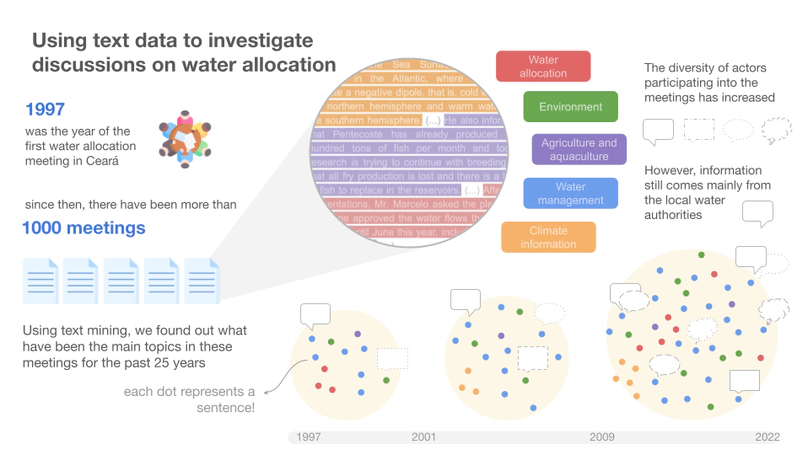
Water allocation decisions have become increasingly participatory in Northeast Brazil, but powerful actors still dominate discussions.

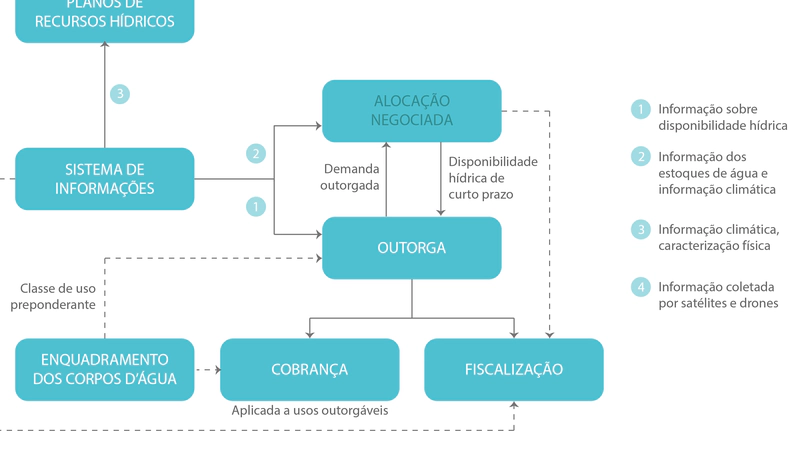
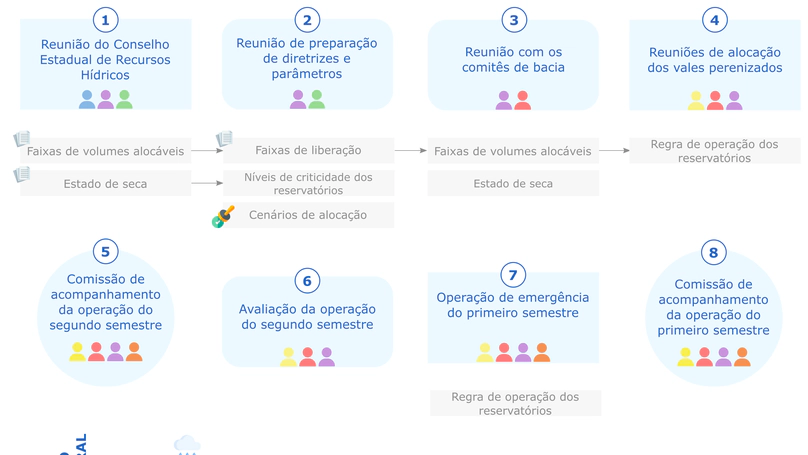
O processo de alocação negociada de água tem se construído de forma adaptativa, participativa e escalável ao longo das últimas décadas. Entretanto, ainda não há documentação formal que detalhe o processo e suas etapas constituintes.

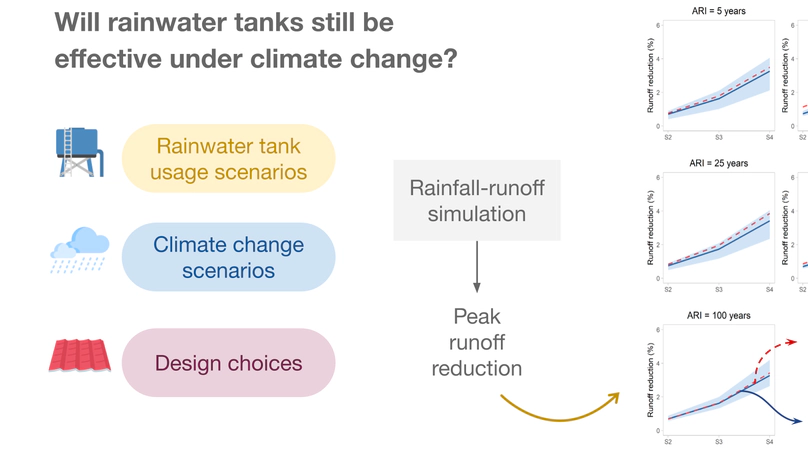
Rainwater tanks or cisterns are a low-impact development infrastructure used to control stormwater runoff and reduce water demand. However, climate change may affect its performance due to increased rainfall intensities. In this study, we evaluated the uncertainty of the effectiveness of cisterns in reducing peak runoff under climate change in an urban watershed in Brazil.
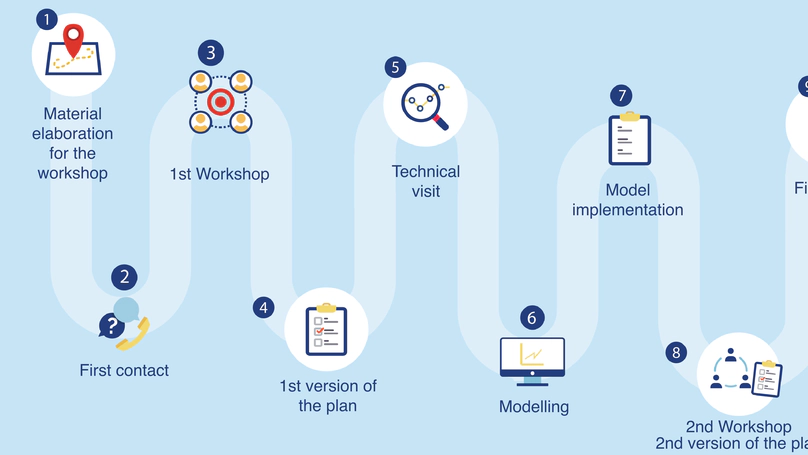
In this project, we developed a step-by-step methodology to guide the implementation of a participatory drought preparedness plan, specially designed for hydrosystem and city scales. We highlight strategies to engage local stakeholders in constructing such plans and build trust in the process.

The negotiated allocation process, conducted annually by COGERH after the rainy season, is the key element of social participation in water resources management in the Brazilian semiarid. Text in Portuguese.